

If you found my web site useful consider making a donation through Pay Pal.
Thanks!

|
|

Custom Search
Gracias a coinmill.com


Dominican Republic Funeral and Marriage Traditions
site map Copyright © 2005 - 2016 All Rights Reserved. Colonial Zone-Dominican Republic (DR)
Our complete exchange rate tool.
Home | Calendar | Night Life/Dining | Sight Seeing | Pictures | Businesses | Artists | Food | Helps | History | Language | Music | Media | Pastimes | Products | Tradition/Legend | Links | About Us | Buy Mamajuana | News Blog | DR Gringa's Life Blog | Dominican Dog Blog
[TOP]

Culture, Traditions and More
Traditions | Myths and Legends | Superstitions | Religious Beliefs | Celebrations of Patron Saints |
Traditions and Beliefs/ Tradiciones y las creencias
Marriage | Funeral | New Years | Explaining Two Last Names or Apellidos | Christmas | Carnival history, celebrations, pictures, videos and more | Town Traditions | Semana Santa/ Holy Week |
Some Marriage/ Matrimoniales Traditions in Dominican Republic
Usually the man proposes. If the couple decides to have a church wedding/ boda and reception then the bride's family mostly does the preparations. Weddings can be expensive and so some people choose to have smaller gatherings or just marry in civil court.
As of January 2012 The Central Electoral Board (JCE) has trained pastors representing non-Catholic religious denominations to celebrate weddings including the Iglesia Asamblea de Dios, Asamblea de Iglesia Pentecostal, Concilio Cristiano, Iglesia Apostolica Misionera, Iglesia Adventista del Septimo Dia, Concilio Menonita, Iglesia Metodista Libre, Dios de la Profecia and Asamblea Cristiana. In the past only a Catholic Church priest could marry a couple. and followers of other Christian religions had to go through a civil marriage process with a Justice of Peace. In the past anyone wanting to marry outside of the Catholic faith ad to marry in a Civil Court of Judges Chamber before the large ceremony so they can have all the legal documents. Then have a church wedding. The couple would marry in civil court or in a judge's chamber the morning of the wedding or even the day before the actual church wedding.
Bridesmaids and large wedding parties are not the norm here. Having a cute little ring bearer and flower girl is. Many times they dress the same as the bride and groom, in smaller scale.
Having "padrinos and madrinas" (godparents of the wedding) is very traditional. The godparents are usually the mother of the groom and the father of the bride and their role is to serve as witnesses. Along with the couple, the godparents also sign the marriage certificate.
Another tradition is to have a child (usually a boy) carry the "arras" or coins on a silver tray. The boy would have 13 coins (they are usually 10 cents coins) that at some point during the ceremony will be passed to the priest. The priest will pass them to the groom and he in turn will pass them to the bride. This exchange signifies that the couple pledges to provide for each other and that material goods are to be shared equally. The whole thing is very symbolic and is quite romantic.
In addition to the flower girl, the ring bearer and the coins bearer, we also have a child that carries a fancy white bible.
The mother of the groom with the groom escorting her enters the church first. The mother of the bride then enters escorted by the father of the groom. The wedding party enters next including the children, usually entering in pairs.
Another Dominican tradition is to have what is called a "ceremonia cantada" meaning that every piece of music was actually sung, instead of being just instrumental.
It used to be that Dominican wedding receptions consisted mostly of cake and champagne, along with light appetizers at best. Today, sit down dinners are the style.
Usually, there's a bachelor party/ despedida de soltero and what you call a bachelorette party/ despedida de soltera. There is also the usual bridal shower.
The vast majority of Dominicans deliver their gifts to the bride's home before the wedding day. Never take a gift with you to the wedding ceremony or reception.
The church is usually not divided into "bride's" and "groom's" sides. So you can sit where you would like.
At the end of the liturgy, a large number of people go to the altar. These are witnesses, and there could be dozens. Asking someone to be a witness is a way of honoring them as a special guest. Many family members and friends will be included.
The newly married couple will be the first to exit the church. Do not try to greet them outside. Instead, proceed directly to the reception.
The bride and her father have the first dance. The groom and the bride's mother join them. Then the entire wedding party and family enter the dance floor. After this then the guests can start dancing.
Funeral Traditions/ Tradiciones funerarias
The wake continues until 12 noon the next day, followed by burial at the cemetery. It is the family's choice to retire at midnight and return the next day around 7 am.
More information about the historical Cementerio Nacional de la Avenida Independencia/ National Cemetery Avenue Independencia and a Cementerio Nacional picture slide show.

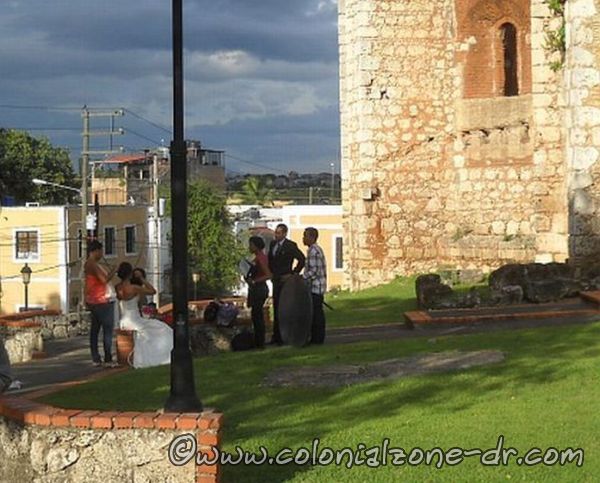
Most newlywed couples will stay until the end of their party, which could last til 3 AM or later. They are never the first to leave. So if you want to leave do not hesitate to leave before the bride and groom. Any time after the meal is socially acceptable, although you are likely to miss quite a party.
There is no tradition about the Groom not seeing the Bride before the wedding. This is when most of the wedding party photographs are taken.
+click to enlarge Taking wedding pictures at the Ruinas del Monistario San Francisco under dark skies.
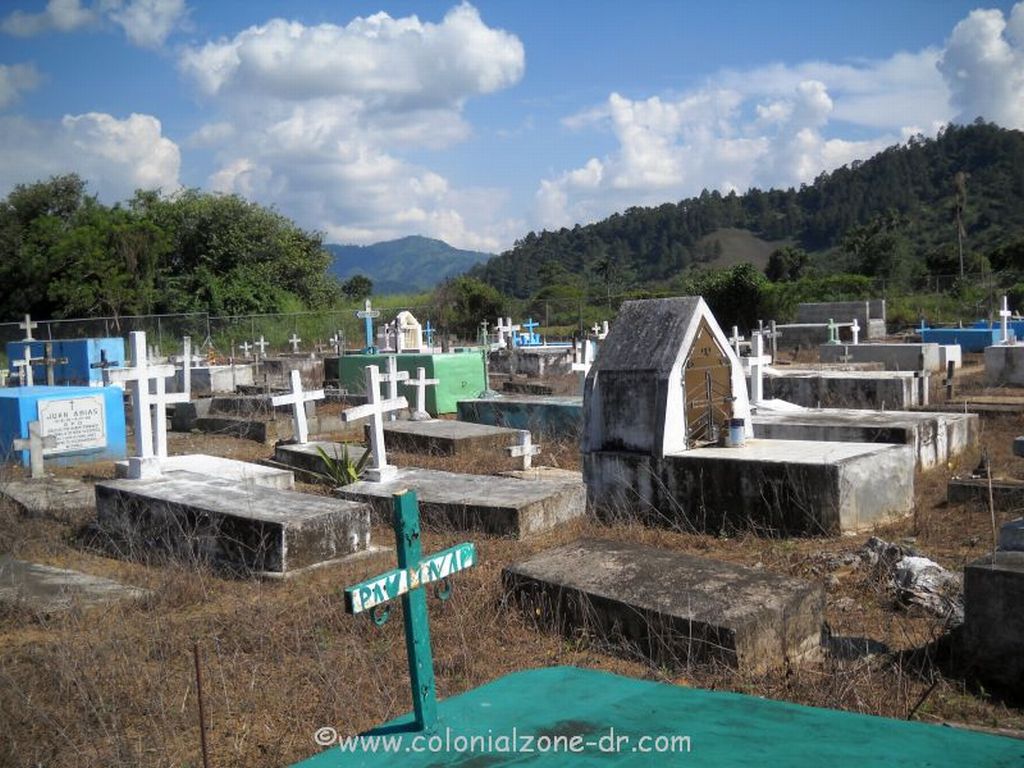
Many families follow on with a series of memorial masses held for nine (9) consecutive days. This is known as los nueves dias, novenario, or la vela. When and where they will be held will be announced. It is not necessary to go to these masses unless you were a close friend of the person or family, especially if you attended the funeral. One is never expected to attend all the masses unless you want to do so. If you were not able to attend the funeral you should go to one of the masses. You might choose to go to the last one that usually will be announced in the press. This marks the end of the mourning period ceremonies.
The nine days of mourning usually consist of three days of grieving (crying and reminiscing). 3 days of silence (thinking and reverence). The last 3 days are for release (accepting and separating).
To "cumplir" is to act in accordance with the standard social procedures. A person will go to a funeral whether or not it is his desire; it is his duty. To "cumplir" is important in this society. It signifies respect and caring.
Many of the poorer people are only laid out for 1 day in the home. This is because of the heat and fast decomposition of the body. Also, the caskets usually have a window for viewing. Maybe this is to keep the smell in and bugs out.
Flowers are not expected.
Only good friends and family are expected at the burial.
Dominicans show much respect for their dead. A funeral is an event that will gather people together, including family members, who may not have seen each other for a number of years. Inside the chapel it is sedated but outside, there will be a lot more liveliness almost reminiscent of a normal social occasion.
+click to enlarge
A cemetery in the town of Nizao
[TOP]
Continue on to PAGE 2 Dominican Republic Traditions.


Personalized Wedding Favors, Invitations, Tote Bags and More! Shop CafePress.com
Home | Dining & Night Life | Hotel | Sights | Pictures | Music | Colonial Zone Map | Hot Spots! Directory | Site Search