Alcantarilla Colonial/ Colonial Culverts
This culvert is one of the firsts of the Americas and is among the many firsts found here in the Colonial Zone.
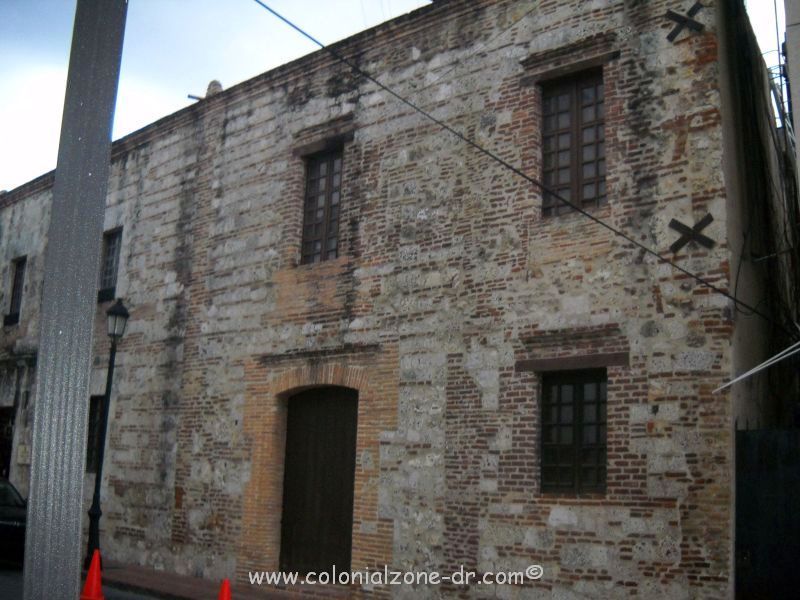
Built in the 14th century by Diego Caballero, Secretary of the Real Audience, it has been home to many including Alonzo de Fuenmayor, the first Archbishop of the Cathedral of Santo Domingo, the Garay family were the legend came from. It was also the living quarters of general Bernard Phillipe Alejo Carré during the Haitian occupation of the island. It became an annex of the University of Santo Domingo in 1905 and also housed the Servicio Militar Obligatori / Obligatory Military Service during Trujillos reign
There is a legend surrounding the house - It is said that the house was given to the Arzobispado de Santo Domingo by the wife of Don Luis Garay for the salvation of one of her children. It seems that the families pet orangutan was playing with one of her sons and took him to the roof of the house. Here it seemed that the monkey was going to throw the boy from the roof. The mother watching and unable to think of a
The Palacio Consistoral is distinguished by it's tower. This building was constructed in the early 1500's. It was the original location of the old town hall. The Palacio has been remodeled many times during its life time in which much of the original facade has been hidden and covered over. The remodeling done in the early 1900's brought back much of the buildings original eloquence that can be seen today. The central plaza is exquisite with its beautiful fountain and surrounding terraces.
This historical building now is mainly used for cultural events and art exhibits. If you lose your way in the Colonial Area just look to the sky for this tower with the clock (usually the clock is not working). This unique tower can be seen from most of the surrounding Colonial Zone area. If you become lost or can't remember how to get back to the Conde just locate the tower and head towards it.
Directions: Calle El Conde and Arzobispo Meriño, on the right when facing Parque Colon
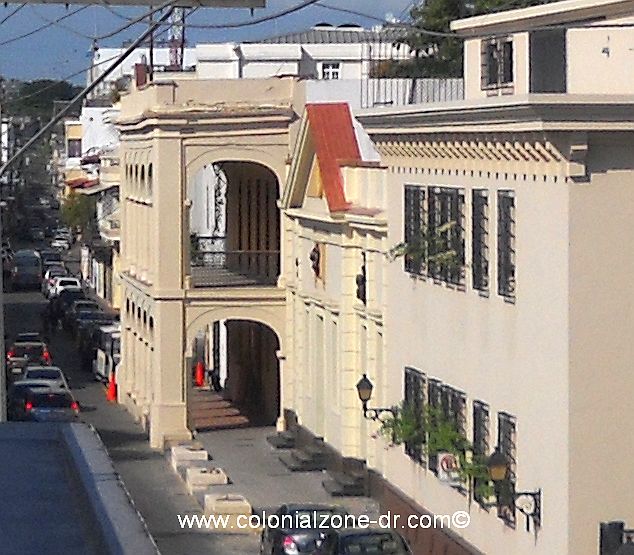
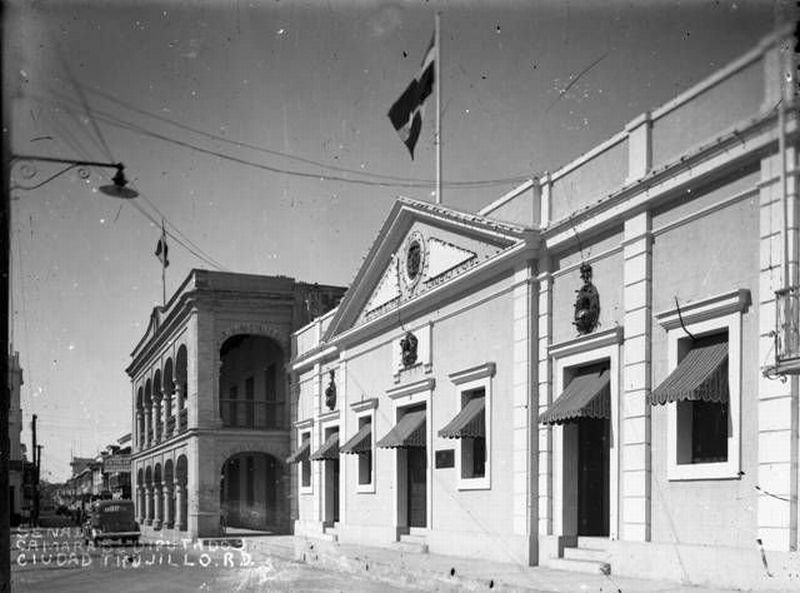
The Palace of Borgellá is a beautiful 2 story building noted for its large colonial style arches and old Caribbean flair. This building with its affluent style was built at the beginning of the 16th century by Haitian G.M. Borgellá. In the 1940's it was the government seat where men were to have hung out discussing the events of the times. It was also used as the location of the Haitian Government when they took over the country.
This building was badly damaged during hurricane George in September 1998. It lost the front porch, which collapsed, and much of its facade, which is now restored. It now houses the seat of the Patronage (who also takes care of the maintenance of the Colonial Zone), the Post Office and the tourism offices.
Directions: Calle Isabel La Catolicá in front of Parque Colon. see the map (number 48)
Casa de las Academias/ House of the Academies or Casa de Lilís
Seat of the Academies of History, the Language and the Medicine/ Sede de las Academias de Historia, de la Lengua y de la Ciencias. The Dominican Academy of Language was founded on October 12, 1927 to ensure the functions of language development. The Dominican Academy of History dedicated to the area of history was founded 23 July 1931 to provide research and studies of Dominican history, search, sort and classify data and documents and to provide information and documentation to people who do research on history. The Academy of Sciences of the Dominican Republic was established on December 20, 1974 to promote the development of science in the Dominican Republic.
This house was constructed in 2 different centuries thus the different styles. It was occupied by President Ulises Hereaux (Lilis).Later remodeled by Manuel Maria Gautier to add the balcony and the iron railings in the French tradition. It has also been the home of Receptoria de Aduana/ customs receiving, Banco Central/ Central bank, Logia Masónic/ a Masonic lodge among others
Directions: Mercedes #204, Zona Colonial see the map (number 10)
Casa de Juan Viloria
It seems that this man was the only person permitted to serve the people of royalty. The patio of this house is surrounded by stone arcs. The Arab porch and the gallery are very unique.
Directions: Mercedes #4 see the map (number 43)
Buried beneath the city is a very important historical sight. The first hydraulic sewage system from the Colonial period. Construction began in 1502 and was named la Alcantarilla de Ovando/ The Ovando Culvert. This was the works for the entire southern part of the city. The second part of this system happened in combination with the construction of the Atarazanas in 1509 and was named la Alcantarilla de Atarazanas. The second culvert was a bit more advanced in its construction as it was made to move more sewage, mainly animal debris, and did not drop into the river. The construction is of brick and stone work. There is a series of archways that, as the construction progressed, one can see the changes in the construction techniques as they became more sophisticated.
One of the entrances is located outside of the Museo del Ron y la Caña on Isabel la Católica street turning north from Colon Park but is usually closed. see the map (number 33)
Near the Ozama River it is said that this is where Columbus moored his ship the Santa María when he first arrived in the Americas. This tree trunk, which seems to be mostly cement now, has been protected throughout history. The people tried to keep the tree up and alive as long as they could. But as time passed the tree just got old, the trunk splitting, becoming hollow and finally falling. What is here now is what is all that is left of that tree. There is no real proof to back up the claims that are made about this tree. There is another Ceiba tree growing now said to be there to protect the original tree. It is akin to a daughter, with its arms outstretched, covering and protecting the elderly mother in all troubles.
This tree has many legends and lore buried within its roots. It is a common tree in warm, tropical regions. The tree can grow to be very tall and its branches form a huge canopy. In Mayan mythology the Ceiba, or tree of life, is said to hold up the sky. It is the national tree of Guatemala.
Directions: near Puerta de las Atarazanas and Avenida del Puerto walking north from Calle el Conde past the Plaza de Armas see the map (number 26)
See our Old Pictures of Santo Domingo Slide Show / To view more pictures of the Palacio go to our picture page here.


See our Old Pictures of Santo Domingo Slide Show /
+click image to enlarge
Palacio de Borgella (top)2012 and (bottom)1940s

+click image to enlarge
Palacio Consistorial tower
+click image to view the Slide Show of the Colonial Culvert
+click image to enlarge
Ceiba de Colon (top) 2011 and (bottom) 1905
|
|

site map Copyright © 2005 - 2016 All Rights Reserved. Colonial Zone-Dominican Republic (DR)
Home | Calendar | Night Life/Dining | Sight Seeing | Pictures | Businesses | Artists | Food | Helps | History | Language | Music | Media | Pastimes | Products | Tradition/Legend | Links | About Us | Buy Mamajuana | News Blog | DR Gringa's Life Blog | Dominican Dog Blog

Custom Search


Home | Dining & Night Life | Hotel | Sights | Pictures | Music | Colonial Zone Map | Hot Spots! Directory | Site Search


MENU
IN COLONIAL ZONE
THINGS DOMINICAN
If you found my web site useful please consider making a donation through Pay Pal . Thanks!

Our complete exchange rate tool.
Gracias a coinmill.com

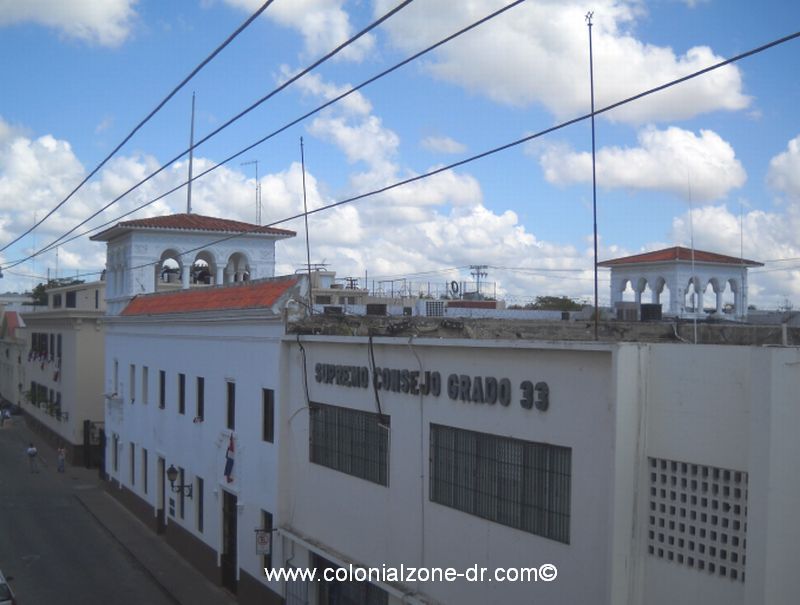
La Casa del Sacramento / The House of Sacrament and Casa de los Presidentes/ House of the Presidents
+click image to enlarge
La Casa del Sacramento towers
way to save her child, offered her home to the Arch Bishop in exchange for the life of the son. The son was returned to his bed without incident. This is how the house got its name.
The Satisimo Sacrament occupied the house until the Haitian occupation in 1822. The house boasts a beautiful patio inside its walls surrounded by large pillars rising to both floors. It was originally two houses but in 1931 in was melded into one and topped with the towers that now sit atop this building.
Today the Casa del Sacramento is home to the offices of the Archbishop of the Dominican Republic.
Directions: Isabel la Católica across from the First Cathedral in the Americas between Calle Pellerano Alfau and Las Damas see the map (number 54)
Palacio Consistorial
Palacio de Borgellá
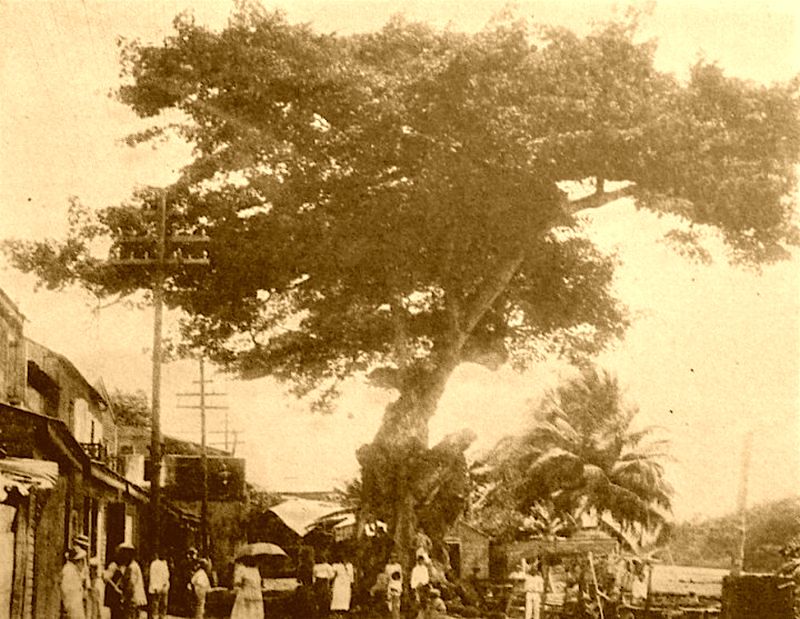
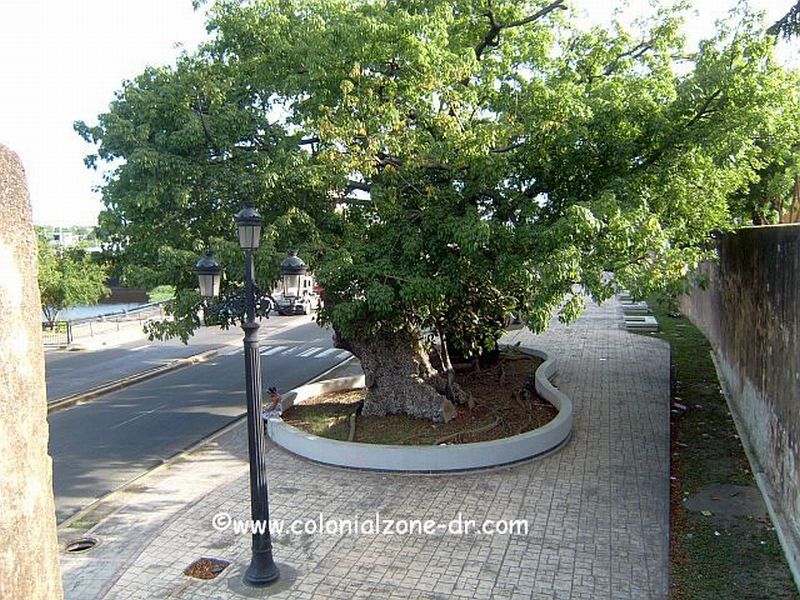
Ceiba de Colon (Ceiba is a species of tree)
See our Old Pictures of Santo Domingo Slide Show