

If you found my web site useful consider making a donation through Pay Pal.
Thanks!

|
|



Dominican Republic Baseball
Home | Dining & Night Life | Hotel | Sights | Pictures | Music | Colonial Zone Map | Hot Spots! Directory | Site Search
site map Copyright © 2005 - 2015 All Rights Reserved. Colonial Zone-Dominican Republic (DR)
Our complete exchange rate tool.
Home | Calendar | Night Life/Dining | Sight Seeing | Pictures | Businesses | Artists | Food | Helps | History | Language | Music | Media | Pastimes | Products | Tradition/Legend | Links | About Us | Buy Mamajuana | News Blog | DR Gringa's Life Blog | Dominican Dog Blog | Web Designer
[TOP]

Custom Search
PASTIMES - What to do in Dominican Republic | Baseball
Finding Something to Do in Dominican Republic | Adventure Sports/ Caving | Baseball | Beaches | Boating/ Fishing | Cock Fighting | Dominoes | Drinking | Lakes/ Rivers | Misc. Sports | Movies | Movie Theaters | National Parks and Reserves | Nature/ Eco Tourism | Santo Domingo Parks and Plazas | Shopping | Tourist Cities | Tourist Stuff | Water Sports | Explore DR -Road Trips |
Baseball/ Beisbol
Baseball | Baseball Teams of Dominican Republic | Past Final Series/ Serie Final Winners | Quisqueya Stadium / Estadio Quisqueya | Fathead Wall Graphics | Baseball Words in Spanish with Translations | Trivia | Links | Video Himno Nacional being sung before game | "Diamonds Rough" Story |
Baseball and Dominican Republic go hand in hand. It is not only the national pastime; it is also a source of great pride for the Dominican people.
The game has been on the island for a long time, the origin of which is disputed much. It is said that Cuba introduced the game to this country. One version says that when Cuban brothers, who were blacksmiths, settled on the island in 1891 that they started teaching the people of Quisqueya the game. Another version is that a Cuban Marine taught the game while his ship was in port. The real competitive game seems to have started with the arrival of the US troops during their occupation of the island in the early 1900's. They played the Dominicans, of course, the Dominican players played to win and show their pride. Thus came about their dominance in the USA baseball venue. Of course, Trujillo, who loved the game, helped to make it what it is today on the island.
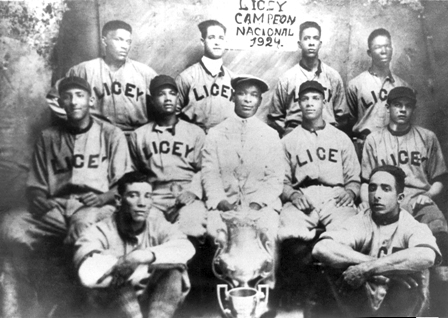
It seems that baseball originated in San Pedro de Macoris. The first professional team formed was in 1907, the Tigres del Licey.
The first Latin American to play in the big leagues was infielder Luis Castro who played with the Philadelphia Athletics in 1902. Then in the 1980's came the real Dominican invasion into USA baseball. Dominicans are the largest Hispanic group in baseball with an average of about 1 in 10 players being Dominicans. The numbers are rising each year.
The League of Professional Baseball Dominican Republic / Liga de Béisbol Profesional de República Dominicana (LiDom) was established in 1951. There are now 6 Major League teams in Dominican Republic.There is also minor league, local and little league teams. You can find a game being playing in almost every town throughout the country. Organized and unorganized games abound showing just how much the Dominicans love their baseball.
Go just about anywhere in the country and you will see signs of baseball. Be it in a field or in the street. There are games being played in the small parks using a stick and a plastic cap from the large water bottles. This is a special game called Juego de Bitilla (click the link for more info about this game). It is amazing to see the distance one can hit the little blue plastic cap. You can see people playing with balls made of tape and rags. Anything they can find to make a ball and a bat just so they can play their beloved game of ball.
For so many Dominicans it is their dream to be able to play baseball and make money doing it. To go and play in USA Baseball is the goal of much of the youth of the country. For many it is the only way they can see to get ahead and make money to support themselves and their families. You can see children whose families have little money but the child playing baseball had a good uniform, a ball and bat, in hopes that they will achieve the ultimate dream of being discovered by one of the many scouts that visit the country looking for the next big league player.
The next time you visit the island make sure to add "see a baseball game" to your agenda. The excitement of the onlookers is contagious. The parties afterwards are great fun. Even if a person's favorite team does not win there is still celebration. It is fun to see, no matter the hour, after a big game is over the celebrations in the streets. People are hanging out of cars. Motorbikes can be seen or should I say heard, dragging sheets of metal clanging and sparking in the street. People are waving flags and hooting and hollering. It is great fun to just observe and even better fun to join in even if you have no idea who won or lost or who the teams are. It is another celebration Dominican style that is a must experience.

The Victors of The Final Series/ Serie Final of Baseball Games Past:
*Los Tígueres del Licey won in: 1951,1953,1958,1963,1969,1970, 1972, 1973, 1976, 1979, 1982, 1983, 1984, 1990, 1993, 1998, 2003, and 2001, 2005, 2006, 2009 and 2014.
*Las Águilas Ciabaeñas won in: 1952, 1964, 1966, 1971, 1974, 1975, 1977, 1978, 1985, 1986, 1992, 1995, 1996, 1997, 1999, 2000, 2002, 2004, 2007 and 2008.
*Los Leones de Escogido won in: 1955, 1956, 1957, 1959, 1960, 1968, 1980, 1981, 1987, 1988, 1989, 1991, 2010, 2012 and 2013.
*Las Estrellas Orientales won in: 1954 and 1967
*Los Gigantes del Cibao won in: 2015, their first win ever!
*Los Toros won only in 1994 and 2011 (playing against the Estrellas 4 to 2).
Estadio Quisqueya - Santo Domingo, República Dominicana
Home of the baseball teams the Leones del Escogido and the Tigres del Licey. Many large concerts and events are also held in this large stadium. Officially inaugurated October 23, 1955 but has undergone many changes throughout the years.
Location - Avenida Tiradentes and Avenida San Martín, Ensanche La Fe, Santo Domingo, Dominican Republic

Spruce up your room, office, game room, or anyplace you would like with some great graphic designs from Fathead. Fathead has wall graphics, tradeables, furniture for fans and skins. They have the biggest and best names in sports, entertainment and video games.
You can be a Fathead! Make a Fathead Wall Graphic of your favorite photo at Fathead.com today!
Get a life size Fat Head decal for your wall of A-Rod (Alex Rodriguez)
Continue learning about Dominican Baseball Page 2
Baseball Teams of Dominican Republic (LIDom)
*Estrellas de Oriente (San Pedro de Macorís)
*Gigantes del Cibao (San Francisco de Macorís)
*Las Aguilas Cibaeñas (Santiago)
*Leones del Escogido (Santo Domingo)
*Los Toros - Azucareros del Este (La Romana)
*Tigres de Licey (Santo Domingo)
If you are not in Dominican Republic and want to see or listen to a game most of the web sites for the teams have a link to their television or radio broadcast that can be watched or listened to on the Internet. All team websites have their schedules listed.
+click to enlarge - Dominican Republic Baseball Tigres de Licey 1924
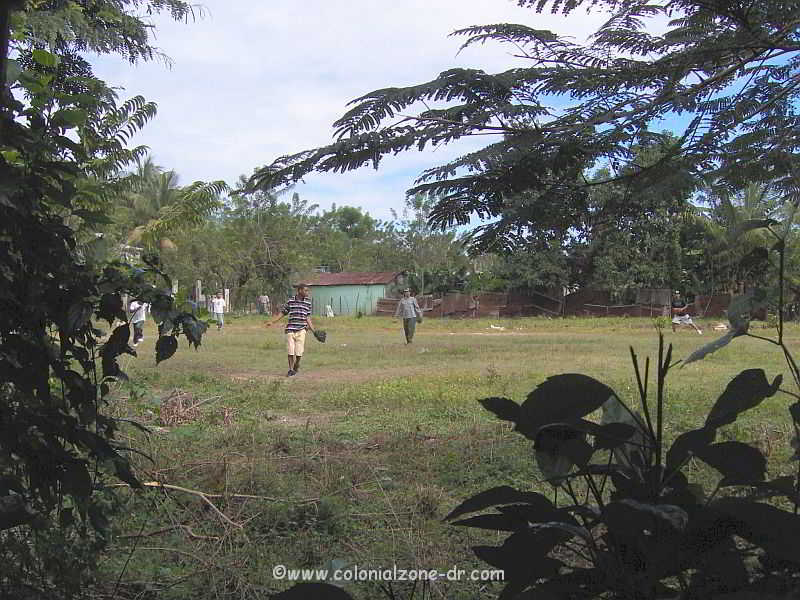
+click to enlarge - Playing baseball in Los Quemados, Bonao
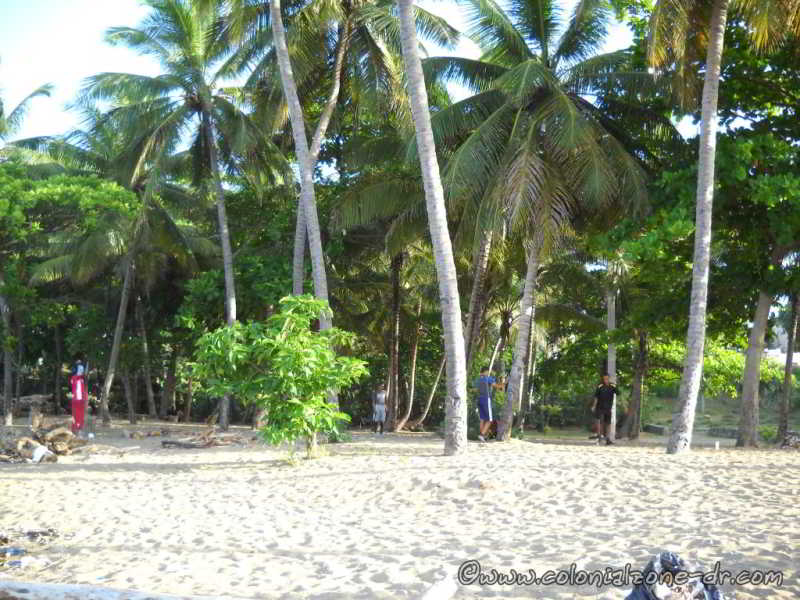
+click to enlarge - Young baseball players working out at Playita Montecino, Ciudad Colonial with their coach
[TOP]


+click to enlarge - The crowds having a great time watching the game at Estadio Quisqueya, Santo Domingo